
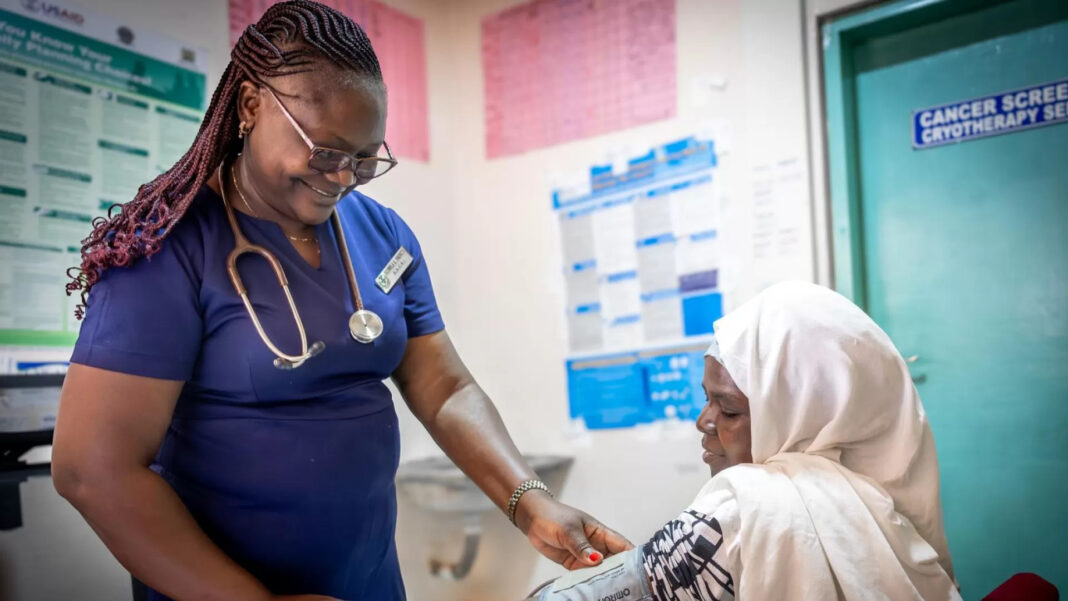

Kenya is strengthening measures to make healthcare safer for millions of people living with Noncommunicable diseases (NCDs), as repeated hospital visits, multiple medications and fragmented referrals expose patients to greater risks of avoidable harm.
The renewed focus comes as the country marked World Patient Safety Day 2026 under the theme “Safe care for noncommunicable diseases: Safe care for life!”, with health authorities and partners highlighting the need to improve safety across the entire patient journey. The World Health Organization (WHO) says NCDs are placing growing pressure on health systems across Africa, with premature deaths from the diseases in the region projected to reach 3.8 million by 2030 if action is not accelerated.
“For a person living with diabetes, cancer, heart disease or a chronic respiratory condition, health care is rarely a single encounter,” said Dr Mohamed Janabi, WHO Regional Director for Africa. “Each interaction should improve health, yet each can also expose a patient to avoidable harm.”
Speaking at Kenya’s World Patient Safety Day Conference 2026, Dr Neema Rusibamayila Kimambo, WHO Representative to Kenya, said global evidence shows that about one in 10 patients experience harm while receiving healthcare, with nearly half of such harm considered preventable.
She said the risks are particularly significant in Africa, where patients face higher risks of harm in hospitals and substantially greater risks of healthcare-associated infections than in other regions.
“For the millions of Kenyans living with noncommunicable diseases, who depend on the health system again and again over many years, these risks compound with every visit,” Dr Kimambo said.
Kenya’s response has included policy reforms, expanded cancer screening, health-worker training and the development of patient safety champions as the country seeks to improve the quality and continuity of NCD care.
The three-day World Patient Safety Day Conference, held from September 9 to 11 at Aga Khan University Hospital in Nairobi, brought together health professionals, policymakers, researchers and patient representatives to examine safety challenges across the NCD care continuum.
Discussions centred on improving primary healthcare, diagnostic accuracy, medication safety, referral and care coordination, digital health, patient engagement and the use of data to drive quality improvements.
Dr Kimambo said investment in patient safety could both reduce costs and improve health outcomes, while warning that delayed diagnosis, medication-related harm, fragmented referrals and inadequate follow-up remain important risks.
“Investing in patient safety not only saves resources but more importantly saves lives and improves health outcomes,” she said.
Kenya’s efforts are also being supported through its participation in WHO-backed initiatives including PEN-Plus and the Women Integrated Care Services (WICS) programme. The initiatives seek to strengthen NCD services at primary healthcare level, including care for people with severe NCDs and women requiring breast and cervical cancer services.
In Bungoma and Nyandarua counties, WHO and Kenya’s Ministry of Health have supported the provision of cancer screening and treatment equipment, including thermo-ablation devices and Loop Electrosurgical Excision Procedure (LEEP) machines. Health workers have also received training on equipment use, treatment procedures and quality data collection.
The WICS programme integrates screening for breast and cervical cancers with services for conditions such as diabetes and hypertension. WHO reports that the programme in Kenya aims to reach 10,000 women, with 3,767 women screened so far and 686 abnormal findings detected, allowing earlier intervention and treatment.
A recent partnership between WHO and Aga Khan University is further examining evidence on HPV DNA genotyping and high-performance cervical cancer screening approaches. The collaboration is also intended to strengthen integrated women’s cancer services, referral networks, diagnostic turnaround times and access to treatment.
Dr Gladwell Gathecha, Head of the Division of Noncommunicable Diseases and Cancer at the Ministry of Health, said WHO-supported programmes, clinical guidelines, health-worker training, specialist mentorship and supportive supervision have strengthened healthcare providers at lower-level facilities and improved the quality of care.
Dr Hongyi Xu, Medical Officer with the WHO Africa NCD Multi-Country Assignment Team, pointed to Kenya’s policy and legal framework as an important foundation for improving patient safety. Key measures include the Primary Health Care Act 2023, the National Essential Medicines List, the 2025 Quality Healthcare and Patient Safety Bill, and ongoing health-financing reforms.
The challenge is particularly complex for patients living with multiple chronic conditions. WHO notes that in urban areas of sub-Saharan Africa, an estimated 45% of adults aged 40 to 60 live with more than one chronic condition.
At the conference, the case of “Mama Amina”, a 64-year-old woman living with five chronic conditions and taking 12 medications, illustrated the risks associated with navigating multiple healthcare providers, facilities and treatment regimens.
Kenya is responding through practices such as patient handover notes, multidisciplinary case reviews and medication reconciliation, which can help reduce duplicate prescriptions and potentially harmful drug interactions.
Dr Xu said Kenya now needs to move beyond expanding access to care towards ensuring that NCD services are consistently safe and of high quality.
“It is important to embed patient safety within all noncommunicable disease-related policies, strategies and plans and, most importantly, to translate policy into practice,” she said.
WHO’s latest regional patient-safety survey, covering 44 of Africa’s 47 countries, found uneven progress in implementing the Global Patient Safety Action Plan 2021–2030. While clinical processes were the strongest area assessed, information and learning systems remained a major gap, alongside health workforce capacity, patient and family engagement and partnerships.
For Kenya, the next challenge will be ensuring that patient-safety reforms reach underserved, remote and pastoralist communities while maintaining essential NCD services during public health emergencies.